Tokyo Neighborhoods Explained: How the City Is Laid Out
Tokyo has no single center. Most people expect it to work like Paris or New York: one downtown, a few famous streets, everything else around them. Instead, Tokyo neighborhoods work like a string of small cities, each with its own crowd, its own look and its own reason to visit.
Shinjuku feels nothing like Asakusa. Ginza feels nothing like Shimokitazawa. And almost all of them are linked by one loop-shaped train line, with trains every few minutes.
The good news: once you see the city as a loop, it clicks. This guide shows you that loop on a real map, tells you what each area is actually for, and helps you plan days that don’t zigzag across town.
In a hurry?
- Tokyo is a cluster of neighborhoods, not one city center. Most of the places you have heard of sit on or near one loop-shaped train line, the Yamanote Line.
- The west side (Shinjuku, Harajuku, Shibuya) is neon, crowds and shopping. The east side (Asakusa, Ueno, Akihabara) is temples, museums and anime.
- Plan each day around one side of the city, and save time for a quieter neighborhood just off the loop.
Tokyo by the numbers
14.3M
people live in Tokyo. About 10 million of them live in the 23 central wards (2026 estimate).
8.6M
people live in New York City (2025 estimate), for comparison. The 23 wards alone have more.
28.7M
international visitors came to Tokyo in 2025, a new record.
630 km²
is the size of the 23 wards, where you will spend almost all of your trip.
30
stations on the Yamanote Line, the loop that ties the main areas together.
60 min
to ride the whole loop. Most trips between main areas take under 35 minutes.
How Tokyo is laid out: think of a loop
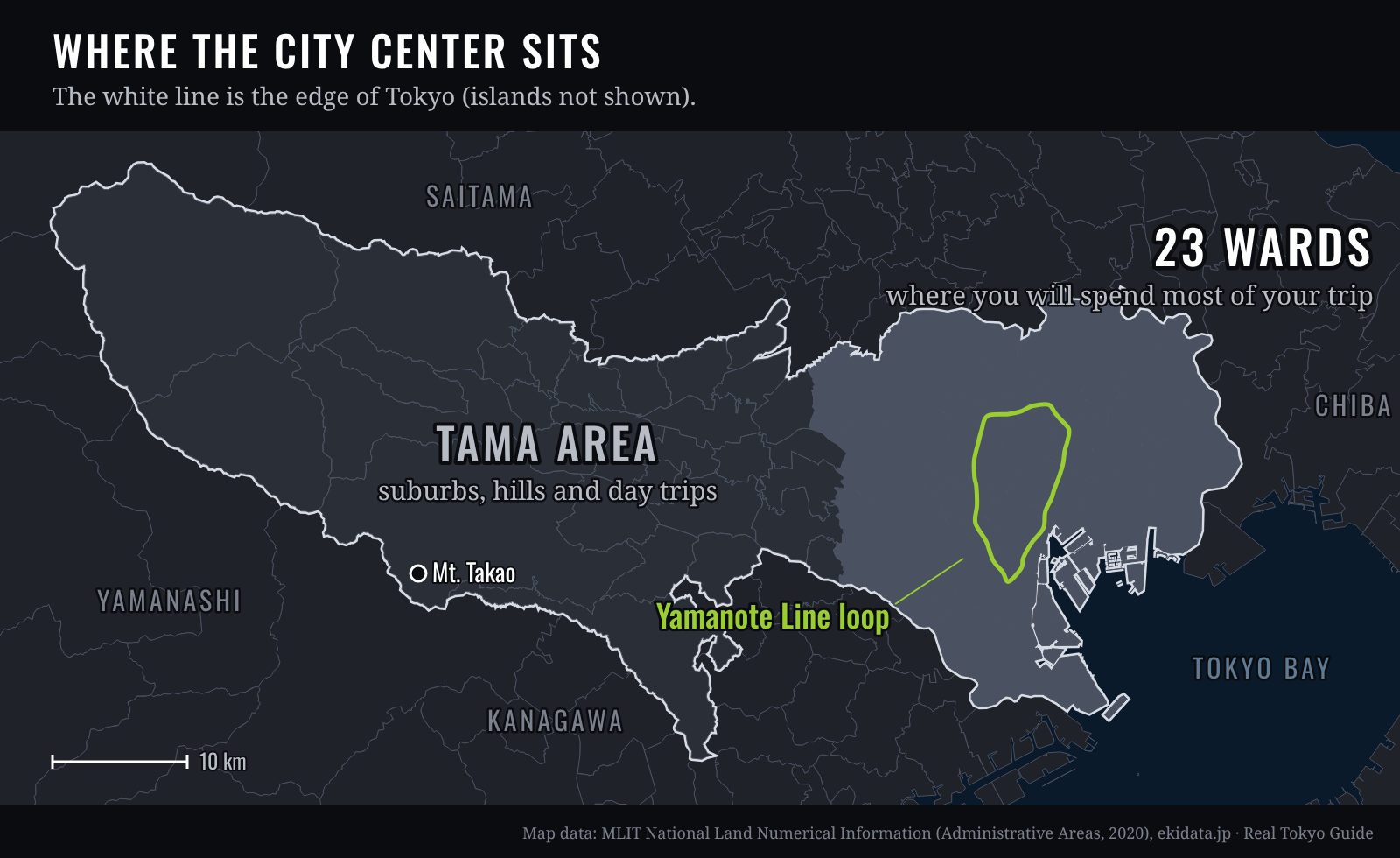
Officially, Tokyo is a whole prefecture. It stretches about 90 kilometers from the mountains in the west to Tokyo Bay in the east, plus a chain of islands far out in the Pacific. The western half, called Tama, is suburbs, hills and day trips like Mt. Takao.
The part most visitors mean when they say “Tokyo” is the eastern end: the 23 wards. And right in the middle of the 23 wards runs the Yamanote Line, a green-colored train line that goes around in a loop.
Zoom in, and you will see that the names you already know are stations on that loop, or one short ride away from it. The Imperial Palace sits roughly in the middle.
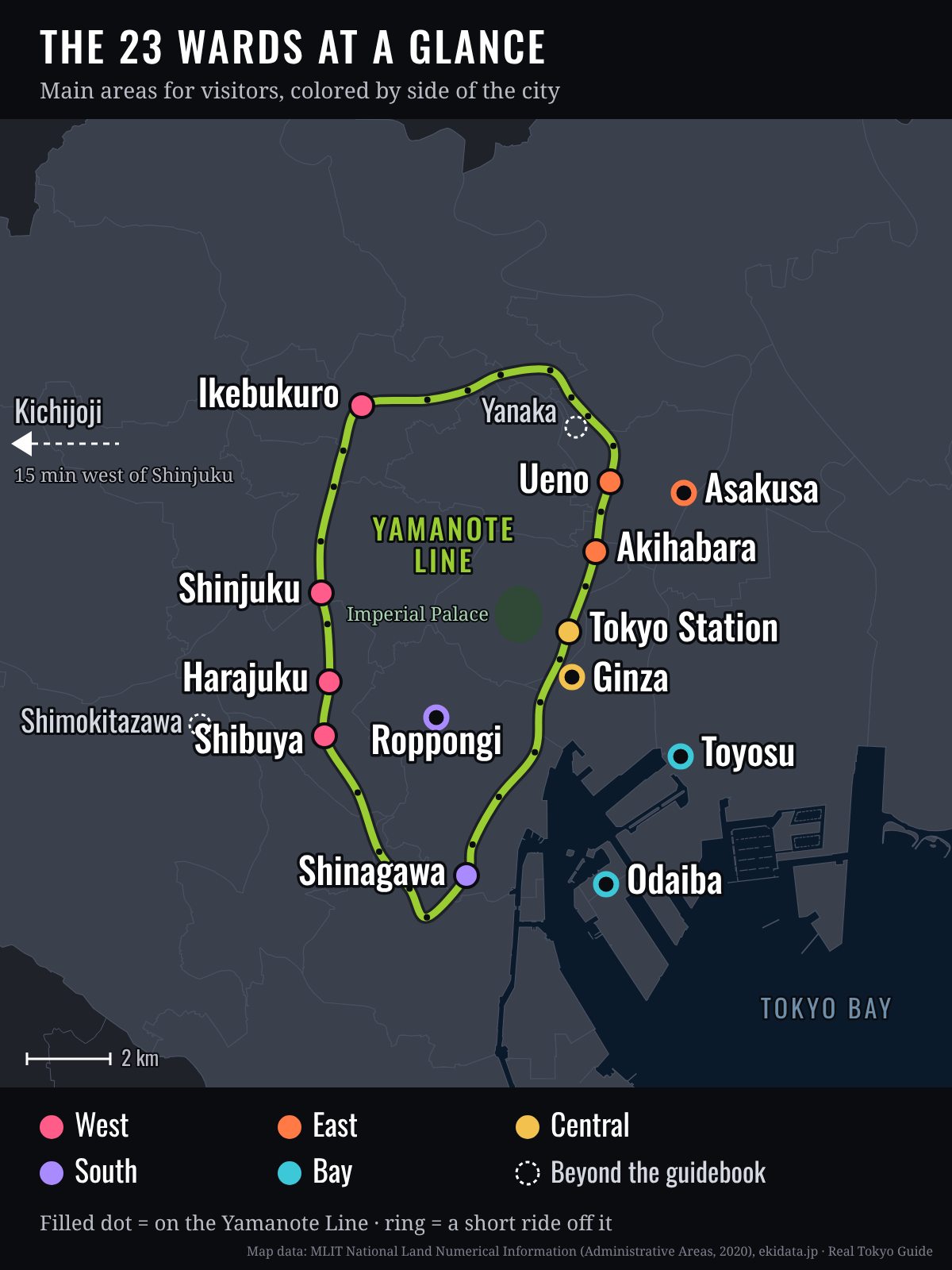
Four rules of thumb make the map easy to read:
- West of the loop is the busy, modern Tokyo of big crossings, neon and department stores.
- East is older: temples, museums, market streets and the anime district.
- The center, around Tokyo Station, is offices, the Imperial Palace and polished shopping.
- The bay, to the southeast, is newer land with waterfront views and big attractions.
Did you know?
The Yamanote Line has 30 stations and takes about an hour to go all the way around. At busy times, trains come every two to three minutes, so you never need to check a timetable.
Which Tokyo neighborhood is for you?
Short on time? Start with what you love, and go straight to the area that does it best.
| If you love | Go to | Side |
|---|---|---|
| Neon, night views and izakaya | Shinjuku | West |
| Street fashion and people-watching | Harajuku, Shibuya | West |
| Character shops and an aquarium | Ikebukuro | West |
| Temples and old Tokyo | Asakusa, Yanaka | East |
| Museums and a big park | Ueno | East |
| Anime, games and collectibles | Akihabara | East |
| Luxury shopping and food halls | Ginza | Central |
| Contemporary art and nightlife | Roppongi | South |
| Waterfront views and digital art | Odaiba, Toyosu | Bay |
| Vintage clothes and live music | Shimokitazawa | Off the loop |
| A park and local life | Kichijoji | Off the loop |
West: Shinjuku, Harajuku, Shibuya and Ikebukuro
This is the Tokyo of postcards and films. Shinjuku, Harajuku and Shibuya sit next to each other on the loop, so one long day covers all three. Ikebukuro is a few stops north of Shinjuku.
Shinjuku
The city that never switches off.
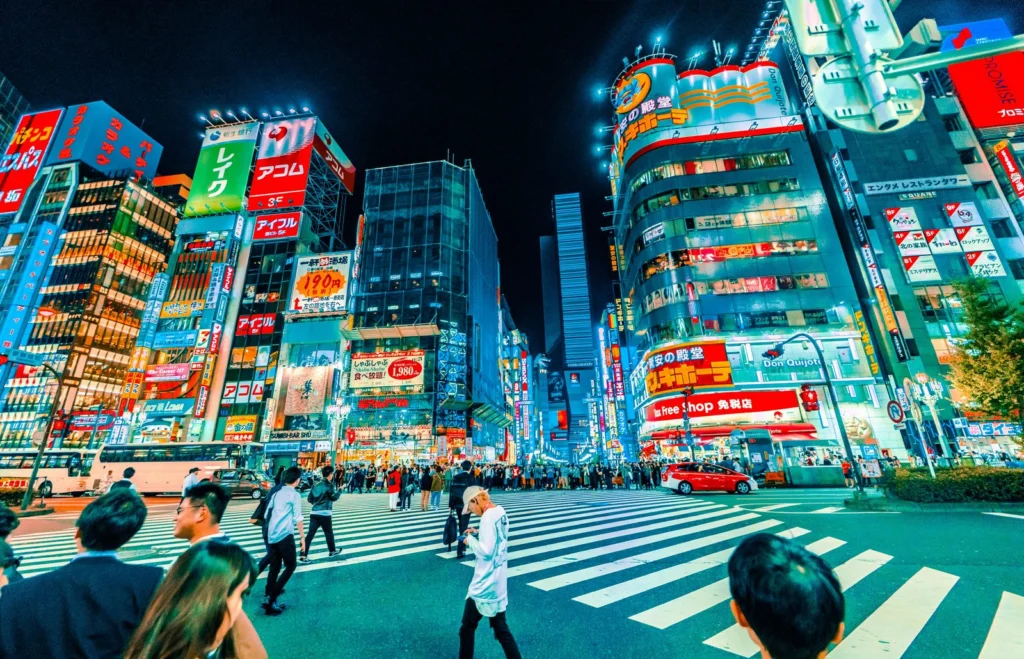
Shinjuku is two worlds split by one enormous station. To the west: skyscrapers, the free observation decks of the Tokyo Metropolitan Government Building, and Omoide Yokocho, a smoky lane of tiny bars and grills. To the east: department stores, the neon of Kabukicho and the bar-crammed alleys of Golden Gai. When you need a break, Shinjuku Gyoen garden is a short walk away.
- Best for night views, food, a classic Tokyo evening
- Don’t miss the free view from the Metropolitan Government Building
- Skip if crowds wear you out
- Station Shinjuku (JR, subway and private lines)
Did you know?
Shinjuku Station is often called the busiest train station in the world, with dozens of exits. Give yourself extra time the first time you change trains here.
Harajuku and Omotesando
A sacred forest on one side, street fashion on the other.
Step out of Harajuku Station and you have a choice. Turn one way and you are under the trees of Meiji Jingu, a calm shrine in a forest planted with around 100,000 trees donated from across Japan. Turn the other way and you are in Takeshita Street, narrow, loud and packed with young shoppers. Walk south and it all grows up into Omotesando, a tree-lined avenue of designer stores and striking architecture.
- Best for Meiji Jingu, fashion, architecture
- Don’t miss the walk from the shrine forest to Omotesando
- Skip if you want to avoid weekend crowds on Takeshita Street
- Station Harajuku (JR), Meiji-Jingumae or Omotesando (subway)
Shibuya
The crossing everyone films, and a lot more behind it.
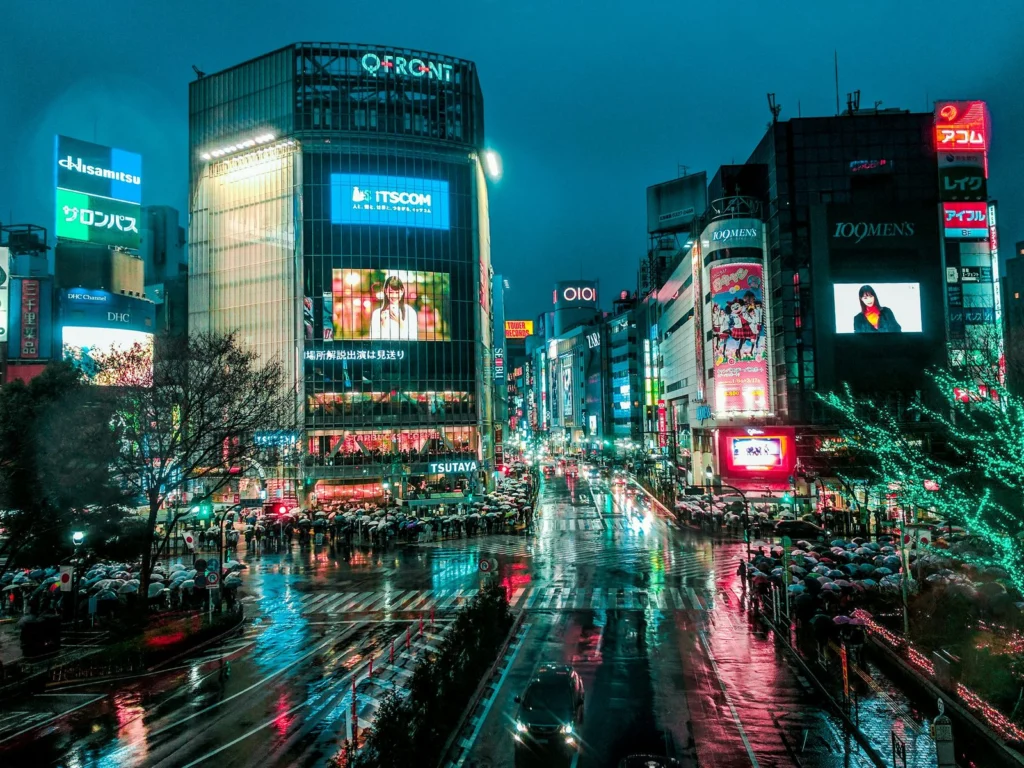
Shibuya is famous for its scramble crossing, where people cross from every direction at once. The station area has been largely rebuilt over the last decade, and new towers such as Shibuya Scramble Square, with its open-air rooftop deck, now look straight down on the crossing. Walk ten minutes away from the station and the streets fill with small shops, cafes and bars.
- Best for the crossing, shopping, rooftop views
- Don’t miss the crossing from above at sunset
- Skip if you are looking for old Tokyo
- Station Shibuya (JR, subway and private lines)
Local tip
Shibuya Crossing and Takeshita Street are busiest from late afternoon and on weekends. For photos without a wall of people, go on a weekday morning.
Ikebukuro
A giant hub at the top of the loop.
Ikebukuro is one of Tokyo’s biggest stations and shopping districts, at the northern edge of the loop. Its centerpiece is Sunshine City, a complex with an aquarium on the roof, an observation deck on the 60th floor, an indoor theme park and the Pokémon Center Mega Tokyo. Nearby Otome Road is lined with anime and manga shops aimed mostly at women, and the streets around the station are known for ramen.
- Best for anime and character shops, a rainy-day plan, ramen
- Don’t miss the rooftop aquarium at Sunshine City
- Skip if you are short on time and have already seen Shinjuku
- Station Ikebukuro (JR Yamanote Line, Tokyo Metro, Seibu and Tobu lines)
East: Asakusa, Ueno and Akihabara
Cross to the east side and the city gets older and more down-to-earth. Asakusa sits just outside the loop, five minutes from Ueno by subway, so these three make a natural day together.
Asakusa
Tokyo’s oldest temple, and the streets that grew around it.
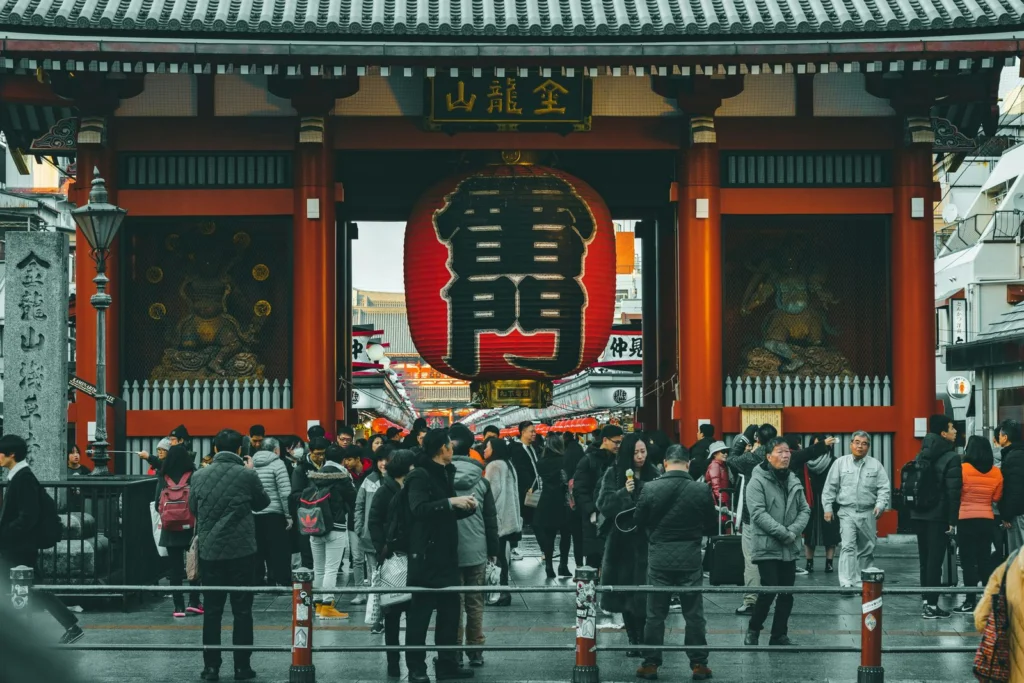
Pass under the giant red lantern of Kaminarimon, walk the souvenir stalls of Nakamise, and you reach Senso-ji, Tokyo’s oldest temple, founded according to tradition in 628. The streets around it keep a low-rise, old-town feel, and Tokyo Skytree rises just across the Sumida River.
- Best for temples, traditional streets, river views
- Don’t miss Senso-ji early in the morning or lit up at night
- Skip if you only have time for modern Tokyo
- Station Asakusa (Tokyo Metro Ginza Line, Toei Asakusa Line, Tobu Line)
Ueno
Museums in a park, and a market with attitude.
Ueno Park packs in several of Tokyo’s major museums, including the Tokyo National Museum, plus a zoo, a lotus pond and hundreds of cherry trees. Right next to the station, Ameyoko is a loud, busy market street that started life as a postwar black market.
- Best for museums, cherry blossoms, street food
- Don’t miss the Tokyo National Museum
- Skip if you have no time for museums or parks
- Station Ueno (JR, subway)
Akihabara
Anime, games and electronics, stacked floor after floor.
Akihabara started as an electronics district and became the center of Tokyo’s anime, manga and game culture. Expect multi-story shops full of figures and retro games, arcades and themed cafes, with the old electronics stores still in between.
- Best for anime, games, collectibles
- Don’t miss a retro game shop or a multi-floor arcade
- Skip if pop culture is not your thing
- Station Akihabara (JR, subway)
Central: Tokyo Station, Marunouchi and Ginza
The center of the city is calmer and more polished. Many travelers arrive here, from the airports or by bullet train, and it makes a convenient base for trips in every direction.
Tokyo Station and Marunouchi
A red-brick landmark and the gardens of the Imperial Palace.
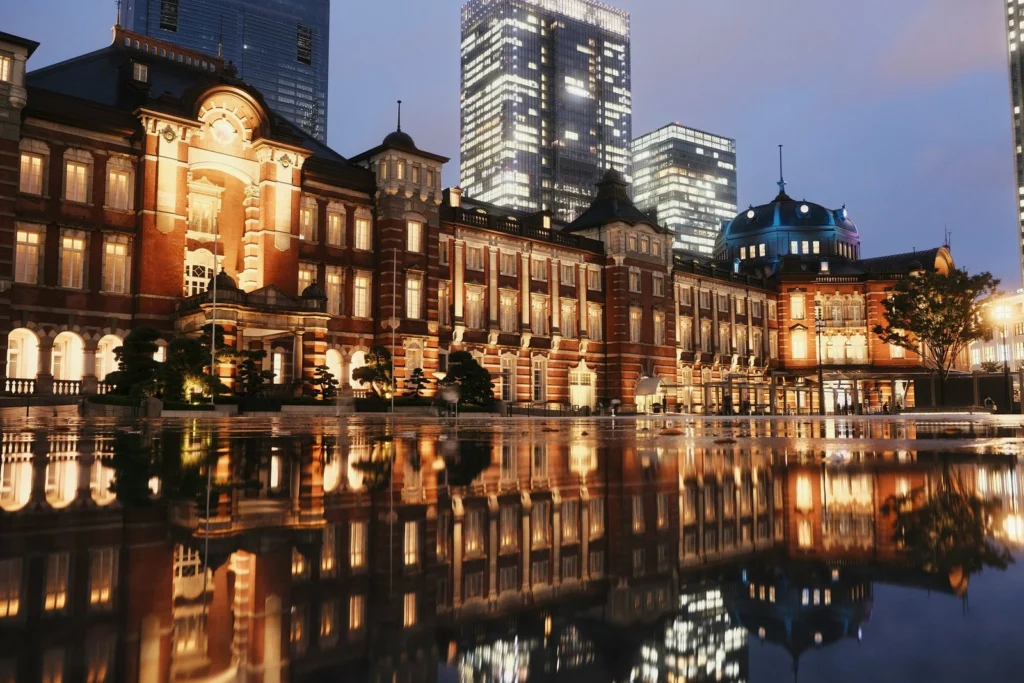
The red-brick Marunouchi building of Tokyo Station first opened in 1914 and has been restored to its original look. It faces a district of wide streets and office towers with good restaurants on their lower floors, and a short walk west brings you to the moats and gardens around the Imperial Palace.
- Best for architecture, an easy base, the Imperial Palace area
- Don’t miss the station building lit up after dark
- Skip if you want nightlife
- Station Tokyo (JR, Shinkansen, Tokyo Metro Marunouchi Line)
Ginza
Tokyo dressed up.
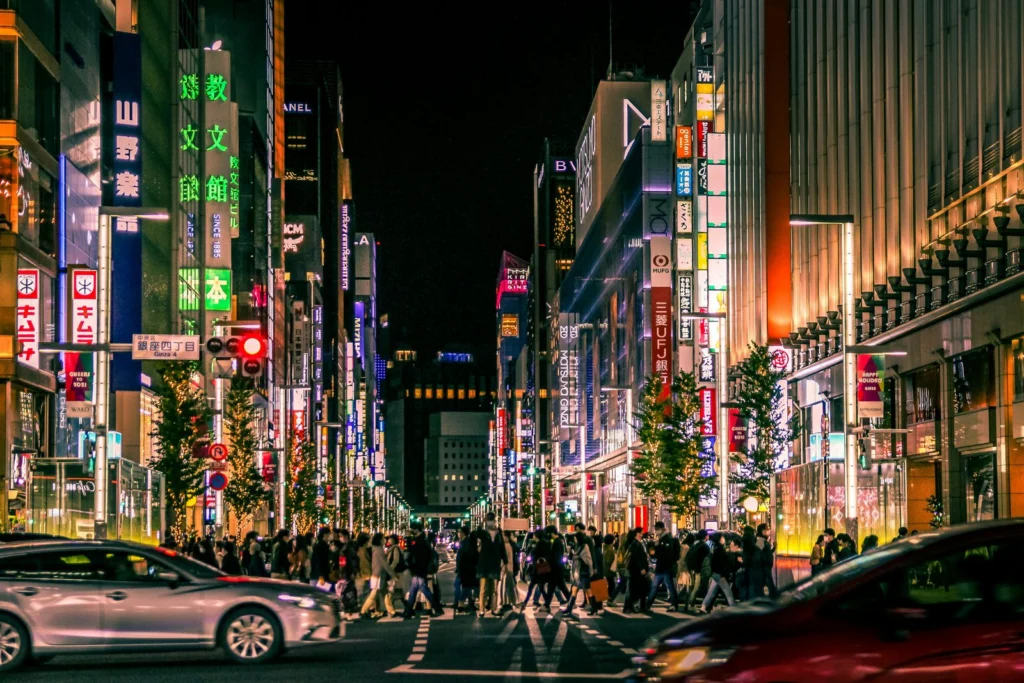
Ginza is Tokyo’s classic upscale shopping district, with department stores, flagship boutiques, galleries and the Kabukiza theater. It is walkable from Tokyo Station, and on weekend afternoons the main street usually closes to cars, so you can stroll down the middle of it.
- Best for shopping, department store food halls, kabuki
- Don’t miss a department store food hall in the basement
- Skip if you are on a tight budget
- Station Ginza (Tokyo Metro Ginza, Marunouchi and Hibiya lines)
South: Roppongi and Azabudai
Roppongi
Art by day, nightlife by night.
Inside the southern half of the loop, Roppongi Hills and Tokyo Midtown hold art museums, shops and restaurants, and Roppongi Hills adds an observation deck high above the city. The nearby Azabudai Hills development, opened in 2023, added more art and restaurants. Roppongi is a little awkward to reach from the Yamanote Line, so most people come by subway.
- Best for contemporary art, city views, nightlife
- Don’t miss a museum visit followed by the view from a tower
- Skip if you want traditional Japan
- Station Roppongi (Tokyo Metro Hibiya Line, Toei Oedo Line)
The bay: Odaiba and Toyosu
Odaiba and Toyosu
Tokyo on the water, built on reclaimed land.
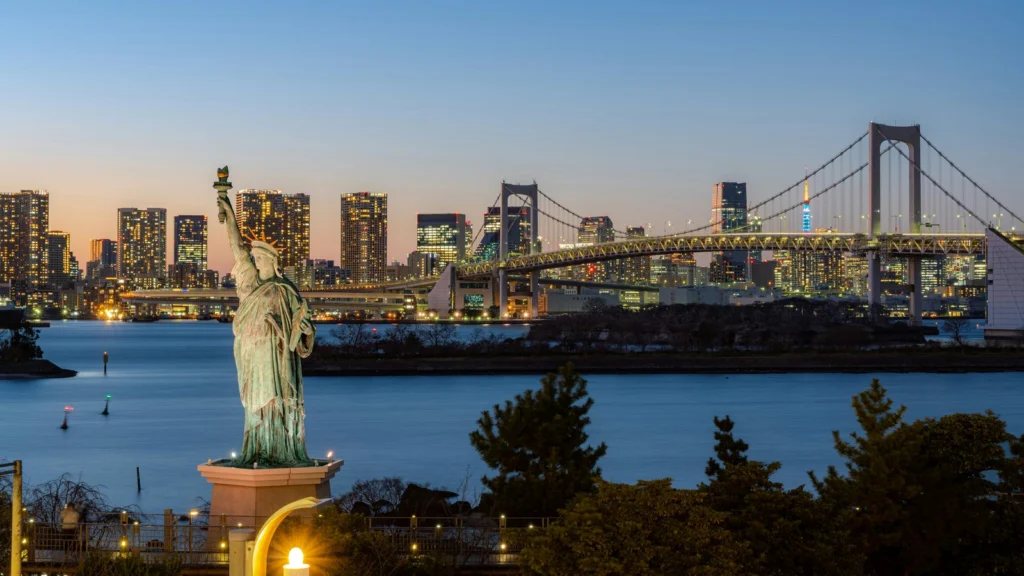
Southeast of the center, Odaiba and Toyosu feel spacious and modern. Odaiba has waterfront walks with views back to the city and the Rainbow Bridge, big malls and family attractions. Toyosu is home to the city’s main fish market, which replaced the old market at Tsukiji, and to teamLab Planets, one of Tokyo’s popular digital art museums.
Ride the Yurikamome, an automated elevated train, from Shimbashi next to Ginza. Sit at the front for the view over the bay.
- Best for bay views, digital art, families
- Don’t miss sunset over the bay from Odaiba
- Skip if you only have one or two days
- Station Daiba or Toyosu (Yurikamome), Tokyo Teleport (Rinkai Line)
Beyond the guidebook: Yanaka, Shimokitazawa and Kichijoji
Have more than a couple of days? These are the neighborhoods where Tokyo slows down. They are not empty, but they are places people live in rather than attractions, and each is easy to reach from the main areas.
Yanaka
The Tokyo that time skipped.
A short walk from Nippori Station, Yanaka is a quiet area of temples, old wooden houses and small craft shops. It came through the 1923 earthquake and the wartime air raids better than most of the city, and it still feels like an older Tokyo. Yanaka Ginza, a small shopping street, is the place for snacks and people-watching.
- Best for a slow walk through old Tokyo
- Don’t miss Yanaka Ginza in the late afternoon
- Skip if you want big sights
- Station Nippori (JR) or Sendagi (Tokyo Metro Chiyoda Line)
Shimokitazawa
Vintage racks, tiny theaters and live music.
Under ten minutes from Shibuya, Shimokitazawa is known for secondhand clothing, small theaters, live music venues, record stores and cafes. It is relaxed and creative, and one of the best places in the city to spend an unplanned afternoon.
- Best for vintage shopping, cafes, live music
- Don’t miss an hour of browsing with no plan
- Skip if you dislike crowded little shops
- Station Shimokitazawa (Keio Inokashira Line, Odakyu Line)
Kichijoji
Where Tokyo locals go on a day off.
About 15 minutes west of Shinjuku by train, Kichijoji is a favorite with people who live in Tokyo. Inokashira Park, with its pond and rowboats, sits right next to a lively area of shops and small restaurants, and the Ghibli Museum is a walk away through the park (tickets must be booked in advance).
- Best for a local-style day out, the park, the Ghibli Museum
- Don’t miss a rowboat on the pond in Inokashira Park
- Skip if you have only a few days
- Station Kichijoji (JR Chuo Line, Keio Inokashira Line)
Did you know?
In 2026, Time Out ranked Koenji, a former punk hub of vintage clothing shops, record stores and tiny bars a few stops west of Shinjuku, No. 8 on its list of the coolest neighborhoods in the world.
Local tip
Our favorite way to see these areas is with no plan at all. Pick one, arrive late in the morning, and walk away from the station in any direction for an hour. The side streets are the point.
Getting between areas
Within one neighborhood, walk. Between neighborhoods, take the train. Tokyo’s network is fast, frequent and signed in English, and most trips between the main areas take less than half an hour. A rechargeable IC card such as Suica or PASMO works on every train and subway line and saves you buying a ticket every time. Contactless credit cards now work on the subways and most private railways, but not yet on JR lines such as the Yamanote Line, so an IC card is still the simplest choice.
| From | To | Time (approx.) | Line |
|---|---|---|---|
| Shinjuku | Shibuya | 7 min | JR Yamanote |
| Shinjuku | Ikebukuro | 9 min | JR Yamanote |
| Shibuya | Harajuku | 2 min | JR Yamanote |
| Shinjuku | Tokyo Station | 15 min | JR Chuo (Rapid) |
| Tokyo Station | Akihabara | 4 min | JR Yamanote |
| Akihabara | Ueno | 4 min | JR Yamanote |
| Ueno | Asakusa | 5 min | Tokyo Metro Ginza |
| Ueno | Ginza | 13 min | Tokyo Metro Ginza |
| Asakusa | Shibuya | 34 min | Tokyo Metro Ginza |
| Ginza | Roppongi | 10 min | Tokyo Metro Hibiya |
| Shimbashi | Odaiba (Daiba) | 15 min | Yurikamome |
| Shibuya | Shimokitazawa | under 10 min | Keio Inokashira |
| Shinjuku | Kichijoji | 15 min | JR Chuo (Rapid) |
| Ueno | Nippori (for Yanaka) | 4 min | JR Yamanote |
Local tip
Big stations have dozens of exits, and the wrong one can leave you ten minutes from where you want to be. Check which exit is closest to your destination before you arrive, then follow the yellow exit signs from the platform.
Three ready-made days
The secret to a good Tokyo day is staying on one side of the city. These combinations keep backtracking to a minimum:
- The neon day (west): Meiji Jingu and Harajuku in the morning, Omotesando and Shibuya in the afternoon, Shinjuku for dinner and night views.
- The old Tokyo day (east): Asakusa early, before the crowds, then Ueno Park and its museums, then Akihabara or Ameyoko in the evening.
- The polished day (center and bay): the Imperial Palace area and Tokyo Station in the morning, Ginza for lunch, then Odaiba or Toyosu for the afternoon and sunset over the bay.
With four or five days, add a slow day in Yanaka, Shimokitazawa or Kichijoji. It is often the day people remember most.
Where to stay, in short
Every main area is well connected, so pick the base that fits your trip:
| Base | Good for | Feel |
|---|---|---|
| Shinjuku | Most trips, day trips by train | Busy, convenient, lots of hotels |
| Shibuya | Shopping and nightlife | Young and lively |
| Tokyo Station, Ginza | Bullet train trips, a calm base | Polished and quiet at night |
| Asakusa, Ueno | Traditional sights, better value | Old-town feel |
FAQ
What is the best area for a first-time visitor to Tokyo?
For sightseeing, there is no single best area. A classic first trip covers Shinjuku, Shibuya and Harajuku on the west side and Asakusa and Ueno on the east. For a base, Shinjuku is the most convenient for most people.
How many days do I need to see the main areas?
Three full days cover the main areas, including an afternoon at the bay, if you plan each day around one side of the city. Four or five days let you add a quieter neighborhood such as Yanaka or Shimokitazawa.
Can I walk between neighborhoods?
Some are close, such as Harajuku and Shibuya, or Tokyo Station and Ginza. Most are too far apart to walk, but the train between them rarely takes more than half an hour.
Do I need a Japan Rail Pass for Tokyo?
Not for getting around Tokyo itself. City trips are short and inexpensive, and the pass is designed for long-distance travel. Use an IC card such as Suica or PASMO instead.
The short version
Stop looking for the center, and picture a loop. Neon on the west side, old Tokyo on the east, polish in the middle and the bay beyond. Plan each day around one side, and leave room for one neighborhood just off the loop. That is where you start to see the real Tokyo.
Planning your trip? Tap Save at the top of this page to keep this guide handy on your phone.